Gemini 4 Argon Is Here, and Its Price Doubles on December 1
Google's Gemini 4 Argon landed Oct 13, 2026 with intro API pricing that doubles on December 1. Here is the cost math for heavy users and teams.
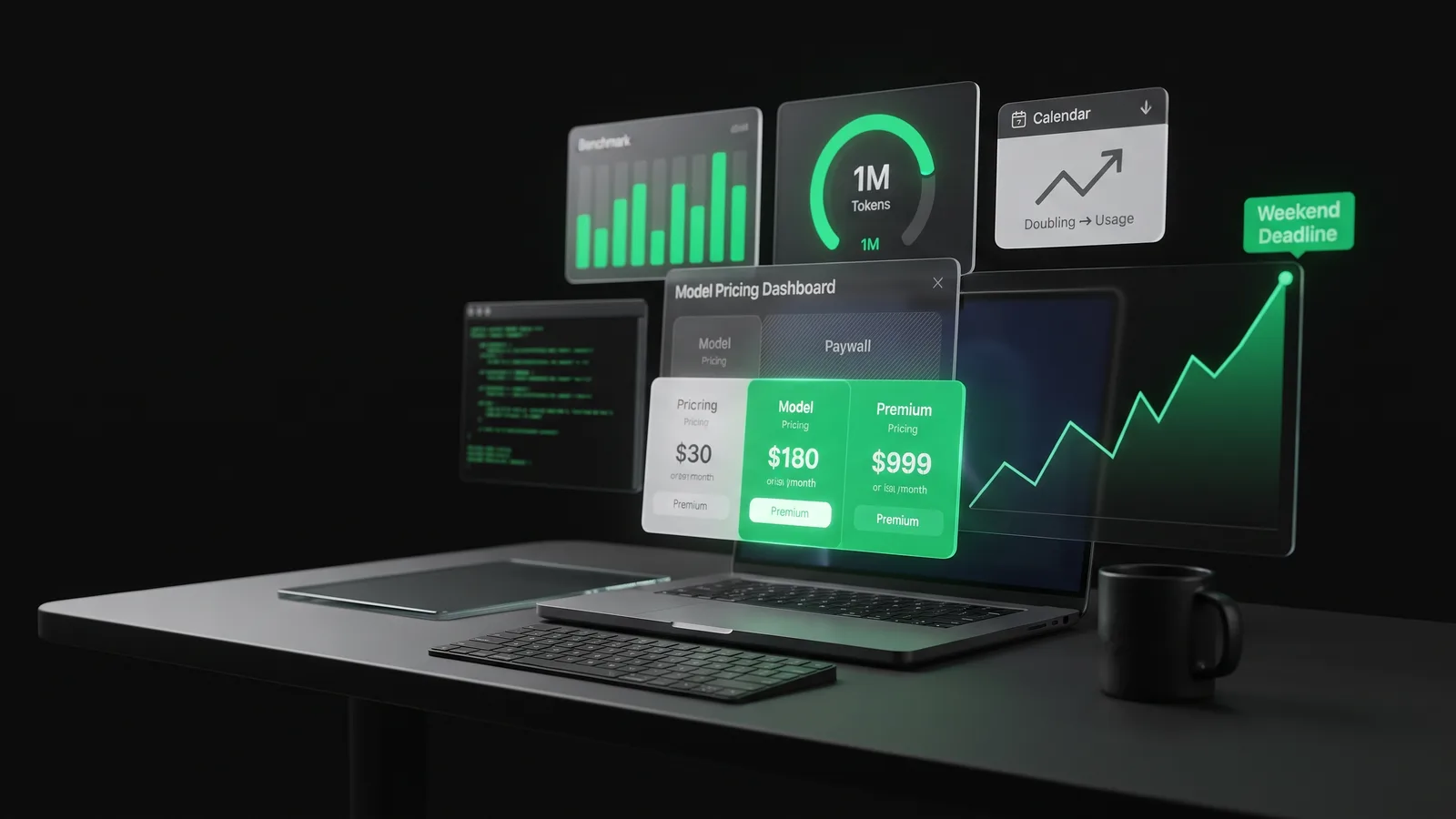
Google shipped Gemini 4 Argon on October 13, 2026, and it went straight to the top of the Gemini app, the Hacker News front page, and every AI newsletter desk that had a slot open. It is the frontier reasoning model Google has been teasing, built for long-horizon software engineering, deep math and science work, and autonomous multi-step agents, with a 1M token context and a headline claim that it ties for first on CWE-Bench at 68% for vulnerability remediation.
If you run AI tools on a real budget, the launch post is not the important document. The important document is the pricing table, and it contains a deadline that quietly decides what you pay in December.
The real headline: an intro price that doubles on December 1
Gemini 4 Argon is priced at $2.00 per million input tokens and $10.00 per million output tokens. Those are launch numbers with an expiry date stamped on them: both double on December 1, 2026, to $4.00 input and $20.00 output. Context caching follows the same curve, moving from $0.10 to $0.20 per million cached tokens on the same date.
Read the table closely and a second constraint shows up. Argon supports implicit caching only. Explicit caching, the kind you configure yourself and pin to a known prefix, is not supported on this model. That matters because the whole point of a 1M token context window is keeping a large, stable body of material resident across many calls. Implicit caching gives Google control over when a prefix is reused; you cannot design around it the way you can with a model that accepts explicit cache breakpoints.
Then there is the availability line that has annoyed a lot of paying customers. The Gemini API pricing page states plainly that Gemini 4 Argon is not available on the Free tier or on the Google AI Pro plan. Developers need the paid API tier. In the Gemini app, the announcement says AI Pro and Ultra subscribers can access Argon. So the consumer side and the developer side do not line up perfectly, and anyone building on the API should assume the paid tier is the floor, not a nice-to-have.
What $2/$10 becomes at agent scale
Intro pricing always looks generous until you multiply it by agentic volume. Argon is explicitly sold for long-horizon workflows: code migrations, frontier research, multi-step agents that run unattended. Those are exactly the workloads that burn tokens fastest, because an agent re-reads accumulated context at every step.
Do three quick multiplications.
A single long research task that reads 200,000 input tokens and writes 20,000 output tokens costs about $0.60 today and about $1.20 on December 1. One person doing that ten times a day spends roughly $180 a month now, roughly $360 after the hike, before caching helps.
A coding agent session that carries a 400,000 token working set across 30 turns will read tens of millions of input tokens in a day. At $2 per million input that is real money; at $4 it is double. If Argon is not reusing prefix context reliably through implicit caching, the input line is the line that grows.
Batch mode softens this. The Batch API runs at half price, $1.00 input and $5.00 output today, doubling to $2.00 and $10.00 on December 1. There is no free batch tier for Argon, so anything you push to batch is still paid work.
The pattern to internalize: Google is not just launching a model, it is moving its frontier model onto a two-phase price. The launch number is a customer acquisition rate. The December number is the operating rate, and heavy users should plan their budgets on the second one.
Where Argon sits next to Claude and GPT
Argon lands in a market where the top tier has settled into two price bands, and Argon is launching into the cheaper band with a timer on it.
Claude Fable 5.1 sits at $10 input and $50 output per million tokens, with a steep cached-read discount that rewards long, cache-heavy sessions. GPT-6 Astra also lists at $10 input and $50 output, with a 90% cache-read discount and a 25% cache-write premium. Google is coming in at a fifth of the input price and a fifth of the output price, which is aggressive, and then moving to roughly 40% of the frontier band on December 1.
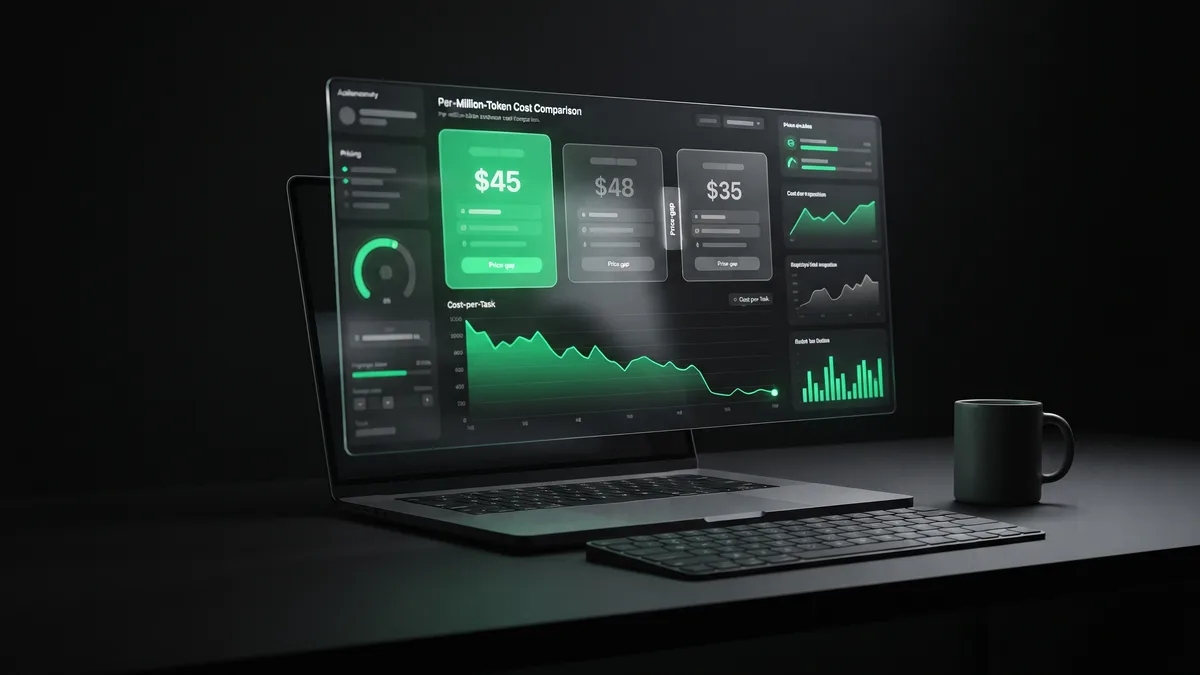
That is still cheaper than the Anthropic and OpenAI frontier models on list price, but the gap narrows to less than half, and the caching story is weaker. If your workload is cache-heavy and long-running, the Anthropic and OpenAI cache economics may beat Argon even at the higher sticker, because the discount applies to the read line that dominates agentic spend. If your workload is mostly fresh input and short output, Argon’s input price is hard to argue with, at least until December.
There is a cross-provider lesson in the timing itself. Over the last month alone, OpenAI restructured ChatGPT Pro into a $500 tier with a usage cut on the $200 plan, Anthropic made Claude Code weekly limits permanent, Google moved Flash and Pro behind paid Gemini plans on October 9, and now Google is putting a December deadline on Argon’s price. Every major provider is pushing heavy users toward either a higher subscription tier or metered API spend. Nobody is holding a price flat.
Benchmarks are the part you should discount
Google’s own claims for Argon are strong and worth noting: a tie for first on CWE-Bench at 68% for vulnerability remediation, the company’s most resilient model against indirect prompt injection, help on a Chromium refactor across hundreds of files, a 2.85x inference speedup on Gemma 4 E2B through vLLM, and 1M token long-decode generation.
They are also vendor-reported, measured on Google’s own early access partners and internal teams. The honest use of these numbers is not to plan a migration, it is to decide whether to run a two-week trial and instrument it. Argon’s benchmark scores will not tell you your cost per completed task. Only your own logs will.
What to do before December 1
Heavy users and the teams paying their bills have a short window to make four decisions.
Lock in a baseline now, while pricing is at the intro rate. Run Argon on your three most common real workloads this month and log tokens in, tokens out, cache hits, and completed tasks. December’s doubling is only a problem if you cannot tell what you spent in October.
Compute cost per completed task, not cost per token. Argon ties for top marks on vulnerability remediation and long software engineering work. If it finishes a task in fewer turns than the model you use today, the higher output price can still net out cheaper. If it takes more turns, the intro discount is an illusion.
Assume implicit-only caching means less savings than the base price suggests. With no explicit cache breakpoints, you cannot pin a large stable prefix the way you can elsewhere. Size your expected cache-read discount conservatively, and check the caching line in the usage logs rather than the headline rate.
Pre-decide your post-December routing. Write down, today, which task families stay on Argon at $4/$20 and which fall back to a cheaper model, the batch path at 50% off, or a real open-weight route. Then re-check the number after December 1 instead of discovering it on an invoice.
Google shipped a genuinely strong model on October 13. It also shipped a price deadline, and the deadline is the part that will show up in your December budget. The users who come out ahead are the ones who measure their own cost per task in the six weeks before the number changes, not the ones who migrate on launch day and read the bill later.
Now available
Stop guessing your AI limits
The Mac app and web dashboard watch your Claude, ChatGPT, Gemini and more, and warn you before quotas hit.